Table of Contents
- Why Peptide Storage Best Practices Matter in 2026
- Lyophilized vs. Reconstituted Storage
- Temperature Requirements: -20°C vs -80°C
- Avoiding Temperature Fluctuations and Freeze-Thaw Cycles
- Proper Sealing and Vial Integrity
- Light Sensitivity and Protection
- Peptide Stability Testing: How to Verify Integrity
- Reconstitution of Research Peptides: Step-by-Step
- Peptide Shelf Life Guidelines for 2026
- Conclusion
- Frequently Asked Questions
Last Updated: September 30, 2026
Why Peptide Storage Best Practices Matter in 2026
Getting peptide storage right protects both your research budget and your results. This guide covers the best practices for peptide storage 2026, from lyophilized powders to reconstituted vials.
Most guides treat storage as an afterthought. That is a mistake.
A peptide is a chain of amino acids. Its shape decides how well it works. Heat, light, and water all change that shape. Once the structure shifts, you cannot reverse it.
The good news: a few simple habits prevent almost every problem. Below, we break down the exact steps we recommend to researchers.
FDA guidance on drug storage and handling
Lyophilized vs. Reconstituted Storage
Lyophilized peptides last far longer than reconstituted ones. A lyophilized powder is freeze-dried and stable for months or years. A reconstituted peptide is dissolved in liquid and degrades much faster.
Lyophilized peptides are freeze-dried powders with most moisture removed. This dry state slows degradation and makes shipping and long-term storage easier.
Reconstituted peptides have been mixed with a solvent like bacteriostatic water. Once in solution, they are far more fragile.
The two forms need different handling:
- Lyophilized: store cold and dry, protect from light
- Reconstituted: refrigerate, use sooner, avoid repeated warming
- Both: keep away from heat and direct sun
A common mistake is leaving a reconstituted vial on the bench “just for a minute.” Those minutes add up. Each warm spell speeds up degradation and shortens shelf life.
Temperature Requirements: -20°C vs -80°C
Temperature is the single biggest factor in peptide stability, but the reason is mechanical, not mystical. Peptide degradation runs on two engines: hydrolysis (water breaking the backbone) and aggregation (chains unfolding and sticking together). Both are kinetic processes, so every 10°C of warming roughly doubles the reaction rate. That is why the difference between a -20°C freezer and a -80°C freezer is not cosmetic, it is a difference in how many reactions per second your sample is losing.
Why -20°C is the default for lyophilized powder. At -20°C, residual moisture in a well-lyophilized cake is largely immobilized, so hydrolysis slows to a crawl. Most lyophilized research peptides hold 12+ months here. This is the workhorse temperature for routine inventory.
Why -80°C exists. A -80°C freezer buys you two things: more headroom for fragile sequences (peptides with cysteine, methionine, or tryptophan residues oxidize faster) and a wider margin if the freezer door opens often. Long-term archives and reference standards belong here. Expect 24+ months for stable lyophilized peptides.
Why reconstituted peptides go in the fridge, not the freezer. Once a peptide is in solution, freezing concentrates salts and buffer components as ice crystals form, which can shift pH locally and force aggregation on thaw. Unless the supplier’s data sheet explicitly permits freezing, keep reconstituted vials at 2-8°C and plan to use them within 2-8 weeks.
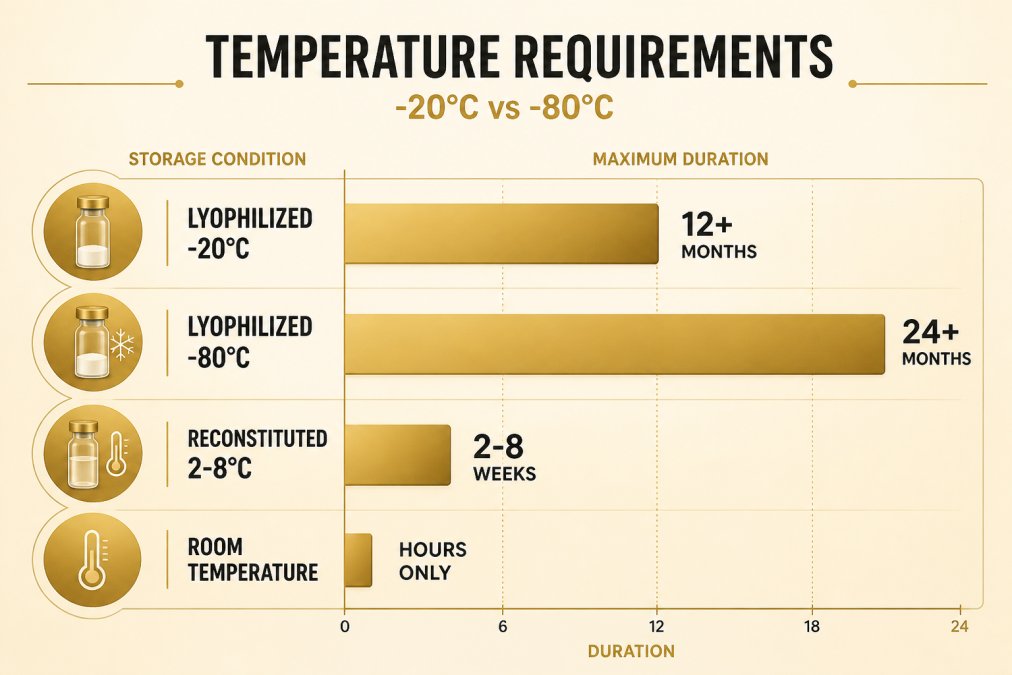
The practical rule:
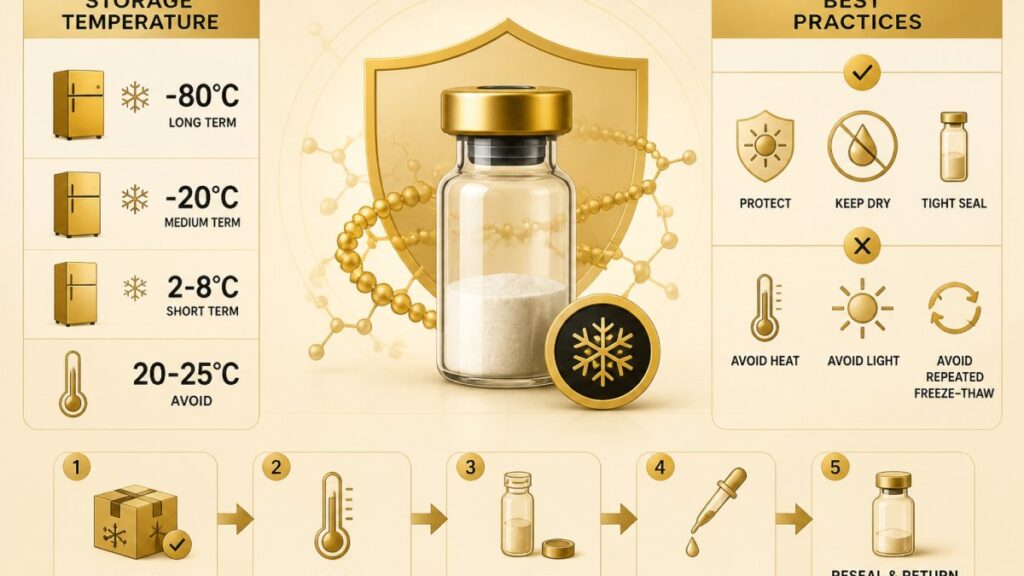
- -80°C: long-term archives, fragile sequences, reference standards
- -20°C: routine lyophilized inventory
- 2-8°C: reconstituted vials in active use
- Room temperature: brief handling only, measured in minutes not hours
A frost-free (auto-defrost) freezer cycles above freezing every few hours to clear ice. That cycle is fine for food and fatal for peptides. Use a manual-defrost freezer, or keep samples in an insulated rack away from the defrost element.
One more variable competitors skip: freezer placement. A -80°C upright on an exterior wall in a warm room can swing several degrees when the door opens. If your lab has a chart recorder or a logging thermometer, put it in the freezer for a week before you trust the setpoint. The number on the display is the air temperature, not your vial’s temperature.
Avoiding Temperature Fluctuations and Freeze-Thaw Cycles
Freeze-thaw cycles are the quiet killer of peptide samples. Every time a vial warms and refreezes, the protein can clump together. This process, called aggregation, reduces potency.
The fix is simple: aliquot before you freeze.
Aliquoting means splitting a sample into small single-use portions. You thaw only what you need. The rest stays frozen and untouched.
- Split samples into single-use vials
- Label each vial with date and amount
- Keep a frost-free freezer if possible
- Never refreeze a thawed aliquot
Thaw aliquots on ice or in the fridge, never in warm water or a microwave. Slow thawing protects the peptide structure far better than fast warming.
Proper Sealing and Vial Integrity
A loose cap lets in moisture and air, and both speed up degradation. But the deeper issue, the one most guides skip, is that the vial itself is part of the experiment. Container material, stopper chemistry, and headspace humidity all interact with your peptide.
The material science of the container. Borosilicate glass (Type I) is the reference standard for peptide storage: it is chemically inert, has a very low coefficient of thermal expansion, and resists leaching at low temperatures. Type II (treated soda-lime) glass is acceptable for short-term work but can shed alkali ions into solution over time. Polypropylene (PP) is common for aliquots and shipping, but PP is slightly permeable to oxygen and water vapor over long storage, and some peptides adsorb to its surface. If you are storing a reference standard for a year, glass wins. If you are aliquoting for a month, PP is fine.
Stoppers are not neutral either. Butyl rubber stoppers are the standard for lyophilized vials because they reseal well after multiple needle punctures. Silicone stoppers are more inert but reseal poorly. A stopper that has been punctured more than a handful of times is a leak, not a seal.
Humidity is the silent variable. Lyophilized peptides are hygroscopic, they pull moisture from the air. A poor seal turns a stable powder into a sticky, degraded mess. The fix is not just a tight cap; it is controlling the headspace. A desiccant pack (silica gel or molecular sieve) inside the secondary container absorbs stray moisture and adds a real layer of protection. For long-term archives, some labs go further and store vials under dry nitrogen or argon.
What to check before every storage session:
- Caps are fully seated and crimped, not just finger-tight
- Septa are not cracked, dimpled, or over-punctured
- Vials show no cloudiness, residue, or cake collapse
- Labels stay readable after freezing (cryo-tape, not paper)
- Desiccant is still active (color indicator, if used)
Weigh a vial before and after a month in storage. A measurable gain means moisture is getting in. This is a cheap, low-tech integrity test that catches seal failures before they ruin a batch.
A note on headspace. Minimizing the air gap above a lyophilized cake reduces oxidation and moisture exposure. If your supplier offers a choice, a smaller vial with less headspace is generally better than a large vial with a thin layer of powder.
Light Sensitivity and Protection
Light breaks down many peptides, especially those with certain amino acids. UV light is the worst offender, but even bright room light can cause slow damage over time.
Amber vials block most light. If your peptides come in clear glass, store them in a dark box or cabinet.
- Use amber glass when available
- Keep vials in a closed drawer or box
- Avoid direct sunlight and bright lamps
- Wrap foil around clear vials if needed
Oxidation, driven partly by light and air, changes the amino acid sequence. That change can lower potency without any visible sign.
Peptide Stability Testing: How to Verify Integrity
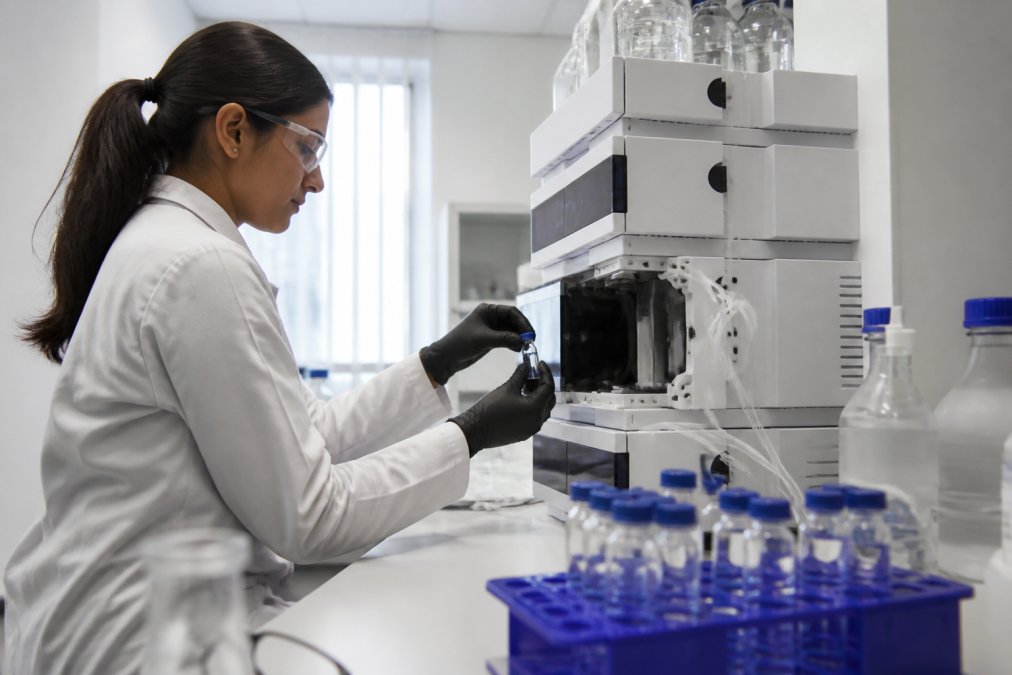
Peptide stability testing tells you whether a sample is still good. You cannot judge quality by looks alone. Clear solutions can still be degraded.
Common testing methods include:
- Mass spectrometry to confirm molecular weight
- HPLC to check purity and spot contaminants
- Visual checks for cloudiness or particles
- pH testing of reconstituted solutions
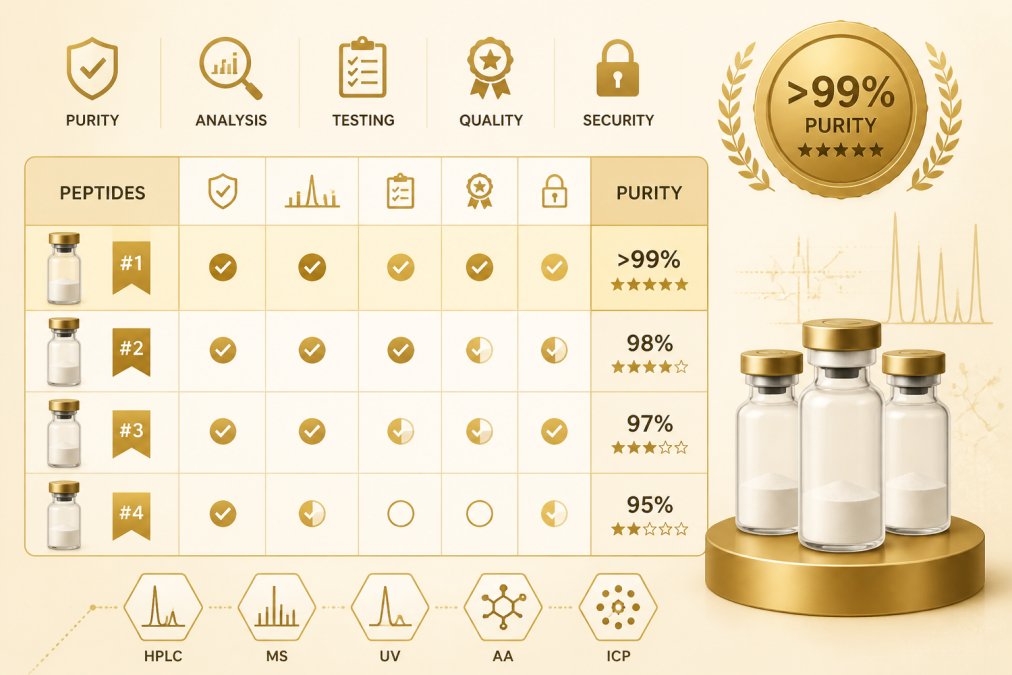
A Certificate of Analysis, or COA, documents purity for a batch. PepAlphatides includes an individual COA with every product and a secure QR code on each vial. Scanning the code pulls up the batch report so you can check purity before you run an experiment.
NIH guidance on research sample integrity
Reconstitution of Research Peptides: Step-by-Step
Reconstitution of research peptides is simple when you follow sterile technique. The goal is to dissolve the powder without damaging it.
Total time: about 10 minutes
Difficulty: beginner
What you’ll need:
- Lyophilized peptide vial
- Bacteriostatic water or sterile solvent
- Sterile syringe and needle
- Alcohol swabs
- Clean, still workspace
Step 1: Prep your workspace [Time: 2 minutes]
Wipe the surface and swab both vial tops. Let them dry.
Step 2: Draw the solvent [Time: 2 minutes]
Pull the correct volume of bacteriostatic water into the syringe.
Step 3: Add solvent slowly [Time: 2 minutes]
Aim the stream at the vial wall, not the powder. This avoids foaming, which can damage the peptide.
Step 4: Swirl, don’t shake [Time: 1 minute]
Gently swirl until the powder dissolves. Shaking causes aggregation.
Step 5: Check and store [Time: 1 minute]
Look for a clear solution with no particles. Refrigerate at 2-8°C.
Expected result: a clear, particle-free solution ready for use.
Slow, gentle handling at every step protects the peptide. Speed and force are the enemies here.
Peptide Shelf Life Guidelines for 2026
Shelf life depends on form, temperature, and handling. There is no single number that fits every peptide. Use these general guidelines and always defer to the supplier’s data.
| Form | Storage Temp | Typical Shelf Life | Key Risk |
|---|---|---|---|
| Lyophilized | -80°C | 24+ months | Moisture |
| Lyophilized | -20°C | 12+ months | Fluctuations |
| Reconstituted | 2-8°C | 2-8 weeks | Hydrolysis |
| Reconstituted | Room temp | Hours | Rapid decay |
Signs of degradation to watch for:
- Cloudy or discolored solution
- Visible particles or clumps
- A gel-like texture
- Loss of expected activity
If a sample shows any of these, treat it as degraded. Do not run it in a critical experiment.
Conclusion
Peptide storage rewards consistency, not complexity. Small habits, like aliquoting, sealing vials, and controlling temperature, protect your samples and your results.
PepAlphatides supports that work with purity levels exceeding 99%, independent third-party lab testing, and a Certificate of Analysis for every product. Each vial carries a secure QR code for full batch transparency. Research members get a 10% discount, and orders over $250 ship free.
Get started with PepAlphatides and keep every sample research-ready.
Frequently Asked Questions
What is the optimal temperature range for long-term peptide storage?
For long-term storage of lyophilized peptides, -20°C or lower is recommended, with -80°C providing the best stability for extended periods. Reconstituted peptides should be stored at 2-8°C and used within a few weeks. Avoid frost-free freezers because they cycle above freezing, which can damage peptide structure. Always verify your freezer maintains a consistent temperature using a calibrated thermometer.
How does lyophilization affect peptide storage requirements?
Lyophilization removes water, making peptides more stable and less prone to hydrolysis and oxidation. This allows lyophilized peptides to be stored at -20°C for months to years. Once reconstituted, the presence of water accelerates degradation, so storage at 2-8°C and rapid use are critical. Always follow peptide shelf life guidelines for both forms.
What are the signs of peptide degradation in storage?
Signs include visible particulates, cloudiness, color changes, and a shift in solubility. In reconstituted form, degradation may appear as precipitation or gel formation. Peptide stability testing using HPLC or mass spectrometry can confirm integrity. If you notice any of these signs, discard the vial to avoid unreliable experimental results.
Can light exposure impact the stability of research peptides?
Yes, ultraviolet and visible light can cause oxidation and breakdown of sensitive amino acids like tryptophan, methionine, and cysteine. Store peptides in amber vials or wrap clear vials in foil. Keep them in a dark cabinet or drawer, even when refrigerated. Light protection is a simple but critical step in any peptide storage protocol.