Table of Contents
- How Peptides Work: Cellular Signaling and Receptor Binding
- Common Types of Peptides for Research
- Benefits for Weight Loss, Muscle Recovery, and Anti-Aging
- Safety, Side Effects, and Adverse Reactions
- How to Read a Certificate of Analysis
- Best Practices for Peptide Reconstitution
- Research Peptide Storage Guidelines and Handling
- How to Inject Peptides Safely: Sterile Technique and Administration
- Post-Cycle Therapy and Recovery Protocols
- Regulatory Compliance and Legal Considerations
- Federal Regulatory Framework
- State-Level Regulations and Controlled Substance Classifications
- Supplier Compliance Responsibilities
- Documentation and Record-Keeping for Legal Protection
- Medical Supervision and Legal Risk Reduction
- International Considerations and Importation
- Enforcement Realities and Consequences
- Summary: Compliance Checklist
- Choosing Quality Compounds: What to Look For
- Common Mistakes Beginners Make in Peptide Research
- Frequently Asked Questions
What Are Peptides and Why They Matter in Research
Peptides are short chains of amino acids linked by peptide bonds, forming building blocks of proteins and serving critical roles in cellular signaling and metabolic processes. For peptide research beginners, understanding how these molecular compounds influence muscle growth, skin health, and metabolic function is essential.
The most common beginner mistake is treating all peptides as interchangeable. Different peptide sequences have completely different functions and effects. Knowing what you’re studying matters as much as knowing how to study it.
How Peptides Work: Cellular Signaling and Receptor Binding
Peptides function through a lock-and-key mechanism where the peptide molecule binds to specific receptors on cell surfaces, initiating a cascade of intracellular signals that produce measurable biological effects. This receptor binding is the foundation of all peptide pharmacokinetics and explains why peptide research for beginners must include understanding this molecular interaction.
The key to peptide efficacy is understanding that peptides are precisely engineered compounds working through specific, measurable biochemical pathways. Your results depend entirely on matching the right peptide to the right research question.
Common Types of Peptides for Research
Growth Hormone Secretagogues
Growth hormone secretagogues are peptides designed to stimulate the release of growth hormone from the anterior pituitary gland, making them among the most studied compounds in peptide research for beginners. These peptides work by binding to specific ghrelin receptors in the hypothalamus, triggering a cascade that ultimately increases endogenous growth hormone production.
Collagen and Tissue Repair Peptides
Collagen peptides are short chains derived from collagen breakdown, functioning as signaling molecules that stimulate fibroblast activity and promote collagen synthesis in connective tissues. These peptides are central to peptide research for beginners interested in tissue repair, anti-aging applications, and musculoskeletal health.
Metabolic and Lipolysis-Focused Peptides
Metabolic peptides are engineered to influence energy expenditure, fat oxidation, and glucose metabolism, making them valuable for peptide research for beginners studying weight management and metabolic optimization. These compounds work through multiple mechanisms: some enhance metabolic rate directly, while others promote lipolysis or improve insulin sensitivity.
Benefits for Weight Loss, Muscle Recovery, and Anti-Aging
Peptide research for beginners often focuses on three primary benefit categories: metabolic support, recovery acceleration, and aging-related outcomes. Understanding these benefits requires distinguishing between theoretical mechanisms and measured results.
The most common beginner mistake is assuming that peptide benefits are automatic. Peptides create favorable conditions for desired outcomes, but they do not replace proper nutrition, training, sleep, and stress management. Results depend on the complete protocol, not the peptide alone.
Safety, Side Effects, and Adverse Reactions
Peptide safety depends on purity, dosage accuracy, sterile administration technique, individual tolerance factors, and awareness of drug interactions that can amplify adverse reactions or reduce peptide efficacy. For peptide research beginners, understanding potential adverse reactions is fundamental to responsible practice.
Common Adverse Reactions and Dose-Dependency
Common adverse reactions include injection site inflammation, headaches, flushing, and temporary elevations in cortisol or prolactin levels depending on the peptide type. Growth hormone secretagogues frequently cause mild cortisol elevation, a temporary effect that typically resolves within 2-4 hours of administration. These reactions are typically dose-dependent and diminish with continued use as the body acclimates.
Drug Interaction Framework
Drug interactions represent a critical safety consideration often overlooked by beginners. Certain peptides interact significantly with common medications, potentially reducing efficacy or amplifying adverse reactions. Before beginning any peptide research, cross-reference all current medications against this interaction framework:
Medications that interact with growth hormone secretagogues (GHRP-2, GHRP-6, ipamorelin):
- Corticosteroids (prednisone, dexamethasone): May blunt growth hormone response; monitor GH levels if concurrent use is necessary
- Somatostatin analogues (octreotide): Directly antagonize GHRP effects; avoid concurrent use
- Thyroid medications (levothyroxine): May require dose adjustment if peptide-induced metabolic changes occur; monitor TSH and free T4 levels
- Diabetes medications (metformin, insulin, sulfonylureas): Peptides may improve insulin sensitivity, requiring medication dose reduction to prevent hypoglycemia; monitor blood glucose closely
- Antihypertensive medications (ACE inhibitors, beta-blockers): Some peptides may affect blood pressure; monitor BP regularly
Medications that interact with metabolic/lipolysis peptides:
- Stimulant medications (amphetamines, methylphenidate): Combined stimulant effects may elevate heart rate and blood pressure excessively; avoid concurrent use or use with caution under medical supervision
- Thyroid medications: Metabolic peptides increase metabolic rate; thyroid medication doses may require adjustment
- Diabetes medications: Close glucose monitoring is essential
- Monoamine oxidase inhibitors (MAOIs): Potential for dangerous interactions; avoid concurrent use
Medications that interact with collagen and tissue repair peptides:
- Anticoagulants (warfarin, apixaban): Collagen peptides may affect clotting; monitor INR if on warfarin
- Immunosuppressants: Peptides that stimulate fibroblast activity may interfere with immunosuppression; consult prescribing physician
Universal interaction considerations:
- Hepatotoxic medications (acetaminophen at high doses, certain statins): Peptides metabolized through the liver may compete for hepatic processing; monitor liver function markers (AST, ALT, bilirubin) every 4-6 weeks
- Nephrotoxic medications (NSAIDs, certain antibiotics): Peptides cleared through kidneys may accumulate if renal function is compromised; baseline creatinine and BUN testing is essential
- Medications affecting hormone levels (hormonal contraceptives, hormone replacement therapy): Peptides that influence endogenous hormone production may interact; monitor hormone levels and clinical response
Monitoring Protocols and Adverse Event Response
Proactive monitoring prevents minor adverse reactions from escalating into serious complications. Establish baseline health markers before beginning peptide research:
Baseline testing (before first administration):
- Complete blood count (CBC)
- Comprehensive metabolic panel (CMP) including liver and kidney function
- Lipid panel (total cholesterol, LDL, HDL, triglycerides)
- Hormone panel relevant to your peptide type (cortisol, prolactin, IGF-1 if using growth hormone secretagogues; fasting glucose if using metabolic peptides)
- Blood pressure and resting heart rate
- Body composition assessment (weight, body fat percentage if possible)
Ongoing monitoring schedule:
- Daily subjective log: Record injection time, dose, injection site, any symptoms (headaches, flushing, appetite changes, sleep quality, mood), and energy levels
- Weekly: Blood pressure and resting heart rate measurement
- Every 2 weeks: Body weight and subjective assessment of recovery, muscle soreness, or unusual sensations
- Every 4-6 weeks: Repeat relevant hormone panels and metabolic markers to track changes
- Every 8-12 weeks: Full metabolic panel and lipid panel to assess systemic effects
Adverse event response protocol:
- Mild reactions (injection site redness, mild headache, slight flushing): Continue monitoring; these typically resolve within 24-48 hours. If they persist beyond 48 hours, reduce dosage by 25% on next administration
- Moderate reactions (persistent headache beyond 4 hours, significant appetite suppression, sleep disruption, elevated blood pressure >10 mmHg above baseline): Reduce dosage by 50% and monitor for 3-5 days. If reactions persist, discontinue peptide and wait 7 days before resuming at lower dose
- Severe reactions (chest pain, severe headache, significant blood pressure elevation >20 mmHg above baseline, allergic symptoms including rash or difficulty breathing, unusual hormonal symptoms): Discontinue immediately and seek medical evaluation. Do not resume without medical clearance
If you experience chest pain, difficulty breathing, severe allergic reactions, or any symptom that feels medically urgent, seek emergency medical care immediately. Inform healthcare providers of the peptide you used, the dose, and the time of administration. Do not attempt to manage severe reactions at home.
Regulatory Compliance and Medical Supervision
Regulatory compliance varies by jurisdiction and peptide type. In most regions, research-grade peptides are sold explicitly for laboratory and analytical use only, with restrictions on human use. Understanding your local regulatory framework is not optional, it is a legal and ethical requirement before beginning any peptide research for beginners. Additionally, conducting peptide research under the guidance of a healthcare provider who can monitor your health and interpret your blood work significantly reduces risk and improves research validity.
How to Read a Certificate of Analysis
A Certificate of Analysis (COA) is a third-party laboratory document that verifies the identity, purity, and quality of a peptide compound. Learning to read a COA is essential for peptide research for beginners because it confirms that the compound you are studying actually matches its description and meets quality standards.
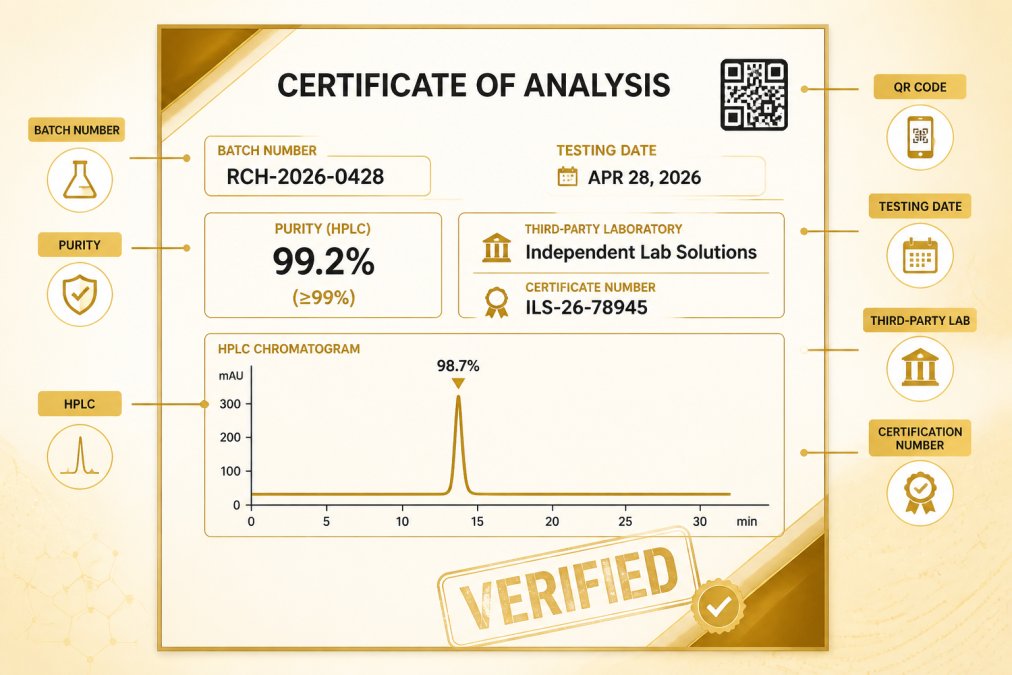
Always request the full COA before purchasing. Suppliers who claim purity but cannot provide third-party analytical verification are cutting corners. The COA is your proof that you are actually buying what you think you are buying.
Best Practices for Peptide Reconstitution
Peptide reconstitution is the process of dissolving lyophilized (freeze-dried) peptide powder into a liquid solution suitable for research use. Proper reconstitution technique directly affects peptide stability, bioavailability, and research reliability, making it a critical skill for peptide research for beginners.
Research Peptide Storage Guidelines and Handling
Proper storage preserves peptide integrity and ensures consistent research results across extended study periods. Peptide stability depends on temperature, light exposure, moisture, and air contact, factors that must be carefully controlled to maintain the compound’s activity.
How to Inject Peptides Safely: Sterile Technique and Administration
Safe peptide administration requires mastery of sterile injection technique, proper equipment selection, and understanding of injection routes. These skills are foundational for conducting reliable peptide research for beginners.
Never reuse needles or syringes. Each injection requires a fresh sterile needle and syringe to prevent infection, cross-contamination, and needle dulling that increases tissue trauma. This is not a cost-saving opportunity, it is a safety requirement for responsible peptide research.
Post-Cycle Therapy and Recovery Protocols
Post-cycle therapy (PCT) refers to the protocols implemented after completing a peptide research cycle to support the body’s natural recovery and restore hormonal balance. Understanding PCT is essential for peptide research for beginners because it directly affects long-term research sustainability and safety.
Regulatory Compliance and Legal Considerations
Understanding regulatory compliance is non-negotiable for anyone conducting peptide research for beginners. The legal status of research peptides varies significantly by jurisdiction, intended use, and specific compound classification, creating a complex landscape that requires careful navigation.
Federal Regulatory Framework
In the United States, the Food and Drug Administration (FDA) regulates peptides as drugs when they are intended for human use. Research peptides sold for laboratory and analytical use only are exempt from certain FDA requirements, but this exemption applies strictly only when the compounds are actually used for research purposes in controlled laboratory settings.
State-Level Regulations and Controlled Substance Classifications
Individual state regulations may impose additional restrictions beyond federal law, and some states classify certain peptides as controlled substances or impose licensing requirements for possession. State-level variation is significant and often overlooked by beginners. Before beginning any peptide research, verify the legal status of specific compounds in your state. Contact your state’s pharmacy board or attorney general’s office if you cannot find clear information online.
Supplier Compliance Responsibilities
Legitimate research peptide suppliers maintain compliance by implementing specific practices that protect both the business and the research community:
- Clear documentation of intended use: Legitimate suppliers provide explicit statements that compounds are for laboratory and analytical use only
- Customer acknowledgment requirements: Reputable suppliers require customers to acknowledge that they understand the research-only restriction and agree to comply with all applicable laws
- Refusal to sell to non-compliant customers: Suppliers who ask questions about intended use and refuse to sell to customers who indicate non-research purposes demonstrate responsible business practices
- Transparent sourcing and testing: Legitimate suppliers provide Certificates of Analysis from independent laboratories and maintain clear records of compound sourcing
- Record-keeping and reporting: Some suppliers maintain records of customer purchases and may be required to cooperate with law enforcement investigations
Documentation and Record-Keeping for Legal Protection
Maintaining detailed records demonstrates good-faith compliance and provides legal protection if your practices are ever questioned. Proper documentation should include:
Research protocol documentation:
- Written research protocol describing your scientific objectives, methodology, and expected outcomes
- Rationale for compound selection and dosing
- Hypothesis or research question you are investigating
- Timeline and duration of the research
- Planned measurements and data collection methods
Compound sourcing and handling records:
- Supplier name and contact information
- Purchase date and invoice number
- Compound name, batch number, and quantity
- Certificate of Analysis for each batch
- Storage location and conditions
- Reconstitution date, method, and storage conditions
- Expiration or degradation dates
Administration and monitoring records:
- Injection dates and times
- Injection sites
- Doses administered
- Any deviations from protocol and reasons for deviations
- Baseline and ongoing health markers (blood work results, blood pressure, weight, body composition)
- Subjective observations and any adverse reactions
- Dates and results of monitoring tests
Compliance documentation:
- Supplier’s terms of service and intended-use acknowledgment
- Evidence of your understanding of legal restrictions
- Any communications with healthcare providers about your research
- Notes on regulatory research you conducted before beginning
Medical Supervision and Legal Risk Reduction
Conducting peptide research under the guidance of a healthcare provider significantly reduces legal and health risks. A physician or nurse practitioner can:
- Assess your baseline health and identify contraindications
- Monitor your health throughout the research period
- Interpret blood work results and identify concerning changes
- Provide medical guidance if adverse reactions occur
- Document your research in medical records, creating a professional record of your protocol and monitoring
- Advise on regulatory compliance in your specific jurisdiction
International Considerations and Importation
If you are considering importing peptides from international suppliers, understand that U.S. Customs and Border Protection actively screens incoming packages for controlled substances and unapproved drugs. Peptides imported for personal use may be seized at the border, and repeated importation attempts can result in criminal charges.
Enforcement Realities and Consequences
The FDA and Department of Justice have increased enforcement actions against peptide suppliers and users in recent years. Enforcement typically focuses on suppliers making health claims or selling to consumers for human use, but individual users can also face legal consequences, particularly if they distribute peptides to others, make health or performance claims about peptides, purchase large quantities suggesting commercial intent, maintain online presence discussing peptide use, or fail to maintain research documentation.
Before beginning any peptide research, consult with a healthcare provider and, if possible, an attorney familiar with pharmaceutical regulations in your jurisdiction. This is not paranoia, it is responsible legal due diligence. The cost of legal consultation is minimal compared to the potential consequences of non-compliance.
Summary: Compliance Checklist
Before beginning peptide research for beginners, verify that you can answer “yes” to all of the following:
- Have you verified the legal status of your specific peptide compound in your state and federal jurisdiction?
- Have you obtained a detailed research protocol documenting your scientific objectives and methodology?
- Have you established baseline health markers through medical testing?
- Have you obtained healthcare provider supervision or at minimum informed a healthcare provider of your research?
- Have you purchased from a legitimate supplier who provides Certificates of Analysis and requires acknowledgment of research-only use?
- Have you established a documentation system for all compound sourcing, administration, and monitoring data?
- Have you reviewed your state’s specific regulations regarding peptide possession and use?
- Do you understand the potential legal consequences of non-compliance in your jurisdiction?
Choosing Quality Compounds: What to Look For
Selecting high-quality peptide compounds is foundational to conducting reliable peptide research for beginners. The difference between quality and substandard compounds directly impacts research validity and safety.
Common Mistakes Beginners Make in Peptide Research
Understanding common pitfalls helps you avoid the errors that compromise research validity and safety.
Frequently Asked Questions
How can I verify the purity of research compounds before purchasing?
Request a Certificate of Analysis (COA) from your supplier before buying. A legitimate COA shows the batch number, purity percentage, testing date, and the independent third-party laboratory that conducted the analysis. Look for suppliers who provide individual COAs for every batch, not generic certificates. Many quality providers now include QR codes on vials that link directly to batch-specific test results, eliminating any ambiguity about whether the compound you receive matches the documented purity level.
What should I look for in a peptide research supplier’s quality documentation?
Verify that the supplier uses independent third-party testing rather than in-house testing alone. The documentation should include the Certificate of Analysis with purity levels, testing methodology, batch-specific identification, and the accredited laboratory’s credentials. Transparent suppliers publish their testing standards openly and allow you to access full analytical reports before purchase. This transparency demonstrates commitment to regulatory compliance and scientific integrity in peptide synthesis and quality control.
How do I safely store research peptides to maintain their stability?
Store lyophilized peptides in a cool, dry place between 2-8°C (refrigerator) or at room temperature if the supplier specifies stability at that range. Keep vials in their original containers away from light and moisture. Once reconstituted with bacteriostatic water, store the solution in the same temperature range. Always use sterile technique when handling vials to prevent contamination. Check your peptide’s specific storage requirements on the COA, as different compounds have varying stability profiles and half-life considerations.
What is the difference between clinical therapy and laboratory research peptides?
Clinical therapy peptides are manufactured, tested, and approved by the FDA for human use under strict pharmaceutical standards. Laboratory research peptides are produced for analytical and experimental use only, not for human consumption or clinical application. Research-grade compounds undergo rigorous purity testing and quality control but are not subject to the same regulatory pathway as pharmaceuticals. Understanding this distinction is critical for compliance and for ensuring you source compounds appropriate for your specific research objectives.
How do I know if a peptide supplier is compliant with regulations?
Check whether the supplier clearly labels products as ‘for research use only’ and maintains transparent documentation of third-party testing. Legitimate suppliers comply with FDA regulations regarding marketing claims and do not suggest clinical use. They provide full Certificates of Analysis, maintain batch records, and can document their sourcing and quality assurance processes. Review their website for regulatory disclaimers and verify that they do not make therapeutic claims about their compounds.
What are the main safety concerns when starting peptide research?
Common safety concerns include infection from improper sterile technique during injection, adverse reactions from individual sensitivity or dosage errors, and contamination from non-sterile bacteriostatic water or equipment. Other risks involve drug interactions if you’re taking other medications, and metabolic stress from incorrect dosage protocols. Always start with lower doses to assess tolerance, maintain detailed records of administration and any side effects, and consider clinical supervision if you have underlying health conditions. Proper storage and handling also prevent degradation that could lead to unexpected adverse reactions.
Do I need advanced experience to use research peptides effectively?
No, but you do need foundational knowledge of reconstitution, sterile injection technique, and dosage protocols. Beginners can use quality research peptides successfully by following standardized dosage protocols, maintaining meticulous records, and starting with conservative doses. Many suppliers provide detailed instructions for reconstitution and administration. The key is understanding your specific peptide’s pharmacokinetics, half-life, and therapeutic index before beginning. Educational resources and transparent documentation from reputable suppliers make peptide research accessible to beginners who commit to learning proper handling and monitoring practices.
What documentation should I maintain for my peptide research records?
Keep detailed records including the peptide name, batch number, purchase date, Certificate of Analysis, reconstitution date and method, storage conditions, administration dates and times, dosages used, and any observed effects or adverse reactions. Document the bacteriostatic water brand and lot number used for reconstitution. Store Certificates of Analysis securely and cross-reference them with your administration log. This documentation is essential for tracking outcomes, ensuring consistency across research phases, and maintaining compliance with record-keeping standards if your research is subject to regulatory oversight.