Table of Contents
- What You Need to Know About Peptide Research Safety
- Understanding Peptides and Their Regulatory Status
- Risks of Unapproved and Low-Quality Peptide Products
- Best Practices for Peptide Storage and Temperature Control
- Peptide Reconstitution Guidelines for Safe Laboratory Use
- Third-Party Purity Testing for Peptides: Verification and Documentation
- Side Effects, Adverse Events, and Health Risks
- Regulatory Compliance and Legal Considerations
- How to Evaluate and Select Safe Peptide Research Materials
- Conclusion: Building a Safe and Compliant Research Practice
- Frequently Asked Questions
Last Updated: September 23, 2026
What You Need to Know About Peptide Research Safety
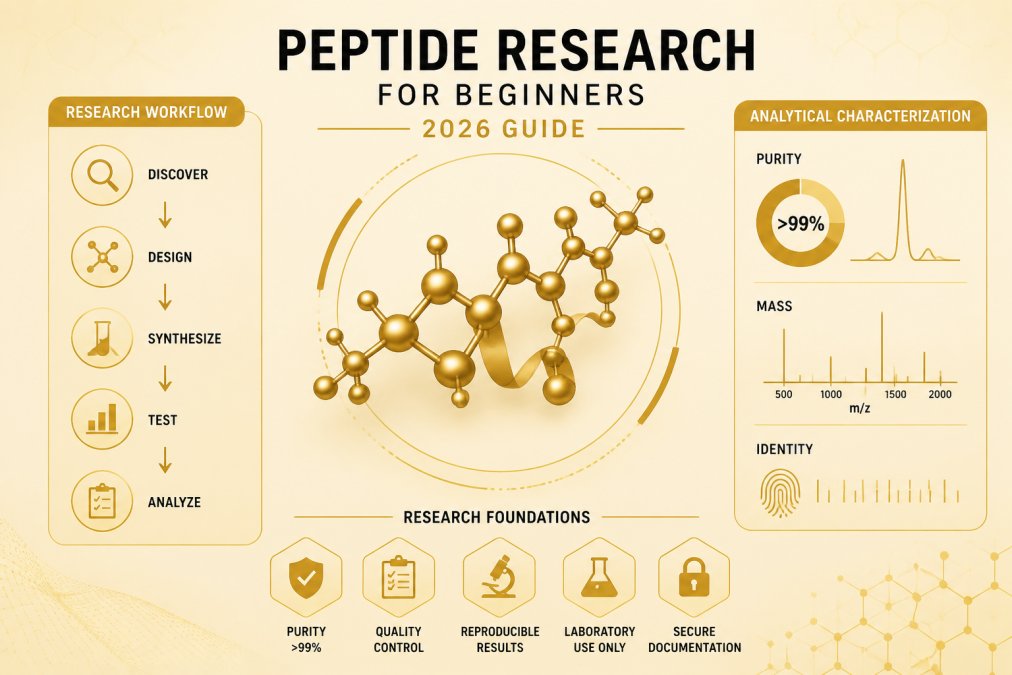
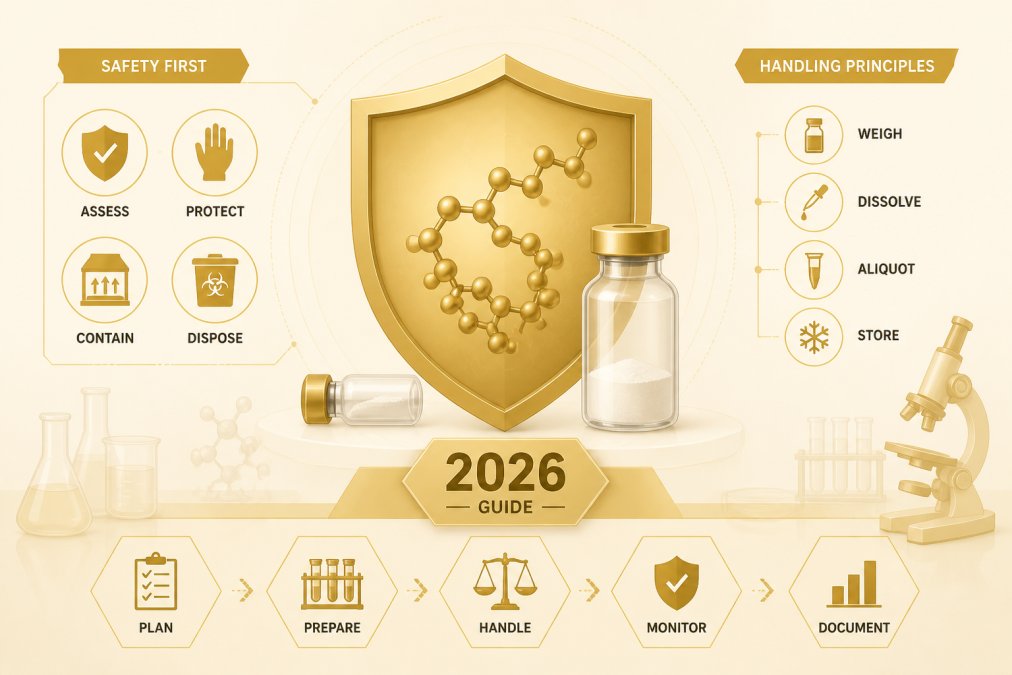
Peptide research safety and handling represents a critical intersection of scientific rigor, regulatory compliance, and laboratory best practices. Whether you’re working with lyophilized peptide powders, reconstituting compounds for experimental use, or managing long-term storage protocols, the decisions you make directly impact both the integrity of your research and the safety of your team.
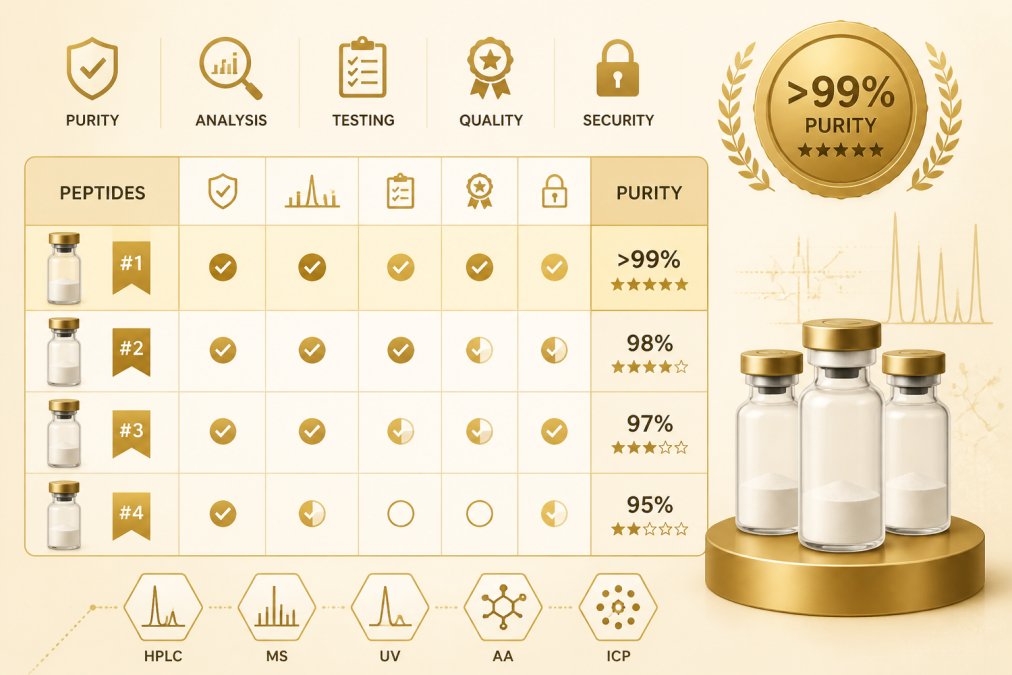
The stakes are higher than many researchers realize. Contaminated peptides can invalidate months of work. Improper storage temperatures degrade chemical stability and render expensive compounds useless. Unverified purity claims expose your research to reproducibility failures and potential regulatory scrutiny. At PepAlphatides, we prioritize scientific integrity by ensuring every batch undergoes independent third-party testing to verify purity levels exceeding 99%.
This guide covers everything you need to establish safe, compliant peptide research practices. We’ll walk through regulatory landscapes, storage protocols, reconstitution safety, verification methods, and the red flags that separate legitimate research materials from problematic sources. By the end, you’ll understand not just what to do, but why each step matters for your specific research context.
Understanding Peptides and Their Regulatory Status
Definition and Therapeutic Applications
Peptides are short chains of amino acids linked by peptide bonds, typically containing fewer than 50 amino acids. Their therapeutic applications span tissue repair, metabolic regulation, performance optimization, and age-related health support. Researchers study peptides for their ability to modulate specific biological pathways with precision that larger protein molecules cannot achieve.
The pharmaceutical industry has developed FDA-approved peptide therapeutics for conditions ranging from diabetes to cancer. However, the vast majority of peptide compounds used in research settings exist in a different regulatory category. Understanding this distinction is essential for safe, legal research practice.
FDA Approval Status and Research-Grade Classification
The FDA distinguishes between clinical-grade peptides (approved for human therapeutic use) and research-grade peptides (intended for laboratory and analytical study only). This classification determines what claims can be made about a compound, how it must be labeled, and what documentation is required.
Research-grade peptides are not approved for human consumption, injection, or therapeutic application. They carry explicit labeling stating “for research purposes only” or “not for human consumption.” This designation reflects regulatory status, not quality, a research-grade peptide can exceed 99% purity and still be classified as research-grade because it hasn’t undergone FDA clinical trials.
The regulatory distinction matters because it determines your compliance obligations. Selling research-grade peptides as therapeutic agents violates FDA regulations. Using clinical-grade peptides outside their approved indication also violates FDA rules. Understanding which category your materials fall into prevents legal and safety problems downstream.
Risks of Unapproved and Low-Quality Peptide Products
Contamination and Purity Concerns
Peptide synthesis is a complex chemical process. Even small deviations in temperature, timing, or reagent quality introduce contaminants. Common contaminants include unreacted starting materials, incomplete synthesis intermediates, and microbial growth from inadequate sterile handling.
Contaminated peptides produce unreliable experimental results. A batch advertised as 95% pure might contain 5% of compounds that interfere with your assays, skew your data, or introduce variables you can’t control. Worse, you won’t know the contamination exists without third-party testing. Many suppliers make purity claims without independent verification.
The cost of discovering contamination late is severe. You’ve already invested time running experiments, generating data, and drawing conclusions. When contamination emerges, your entire dataset becomes questionable. Peer reviewers or regulatory bodies may demand you repeat the work with verified materials. The financial and temporal cost of this discovery often exceeds the original research budget.
Safety Hazards of Unverified Sources
Unverified peptide sources create multiple safety risks. Some suppliers lack proper quality control infrastructure. Others operate without appropriate laboratory certifications or safety protocols. A few deliberately misrepresent their products to undercut legitimate competitors.
Working with unverified sources means you don’t know the actual composition of what you’re handling. You don’t have safety data sheets documenting hazards. You can’t verify storage conditions during shipping. You lack documentation proving the material was handled with proper sterile technique. This ambiguity creates liability for your institution and risk to your research team.
The regulatory environment has tightened around peptide sourcing. Institutions increasingly require documentation of supplier credentials, third-party testing results, and chain-of-custody records. Starting with verified sources prevents compliance problems later.
Best Practices for Peptide Storage and Temperature Control
Cold-Chain Requirements and Storage Temperatures
Peptide stability depends on maintaining specific temperature ranges throughout storage and transport. Most lyophilized peptides remain stable at room temperature (68-77°F) in sealed, desiccated containers. However, once reconstituted, peptide solutions require cold-chain storage at 36-46°F or lower to prevent degradation.
Cold-chain breaks, even brief ones, accelerate chemical degradation. A reconstituted peptide left at room temperature for several hours experiences measurable loss of potency. Extended exposure degrades the compound further, rendering it unsuitable for research. This is why temperature-controlled shipping and proper storage infrastructure matter.
Many researchers underestimate the importance of desiccation. Moisture accelerates peptide degradation, even at cold temperatures. Lyophilized peptides stored in humid environments absorb water vapor, creating conditions for chemical breakdown and microbial growth. Proper storage requires low humidity in addition to appropriate temperature.
Long-Term Stability Data and Chemical Degradation
Understanding your peptide’s stability profile prevents costly failures. Legitimate suppliers provide stability data showing how potency changes over time under different storage conditions. This data typically covers 6-12 months of real-world storage, demonstrating degradation rates at various temperatures.
Stability data reveals important practical information. Some peptides remain viable for 24 months at 36-46°F with minimal degradation. Others degrade noticeably within 6 months. A few compounds show unexpected sensitivity to light exposure or require additional protective measures. Without this data, you’re guessing about shelf life and risking failed experiments.
Chemical degradation follows predictable patterns. Peptides stored at room temperature degrade 2-3 times faster than those maintained at cold temperatures. Exposure to light, oxygen, or moisture accelerates degradation further. Proper storage slows these processes significantly, extending the useful life of expensive research materials.
Document your storage conditions and test peptide stability periodically if you maintain materials long-term. A simple potency retest every 3-6 months confirms your materials remain suitable for research. This practice prevents the discovery of degraded compounds mid-experiment.
Peptide Reconstitution Guidelines for Safe Laboratory Use
Sterile Technique and Cross-Contamination Prevention
Reconstitution, dissolving lyophilized peptide powder in solution, introduces your highest contamination risk. Once the sealed vial opens, the peptide becomes vulnerable to bacterial spores, fungal organisms, chemical contaminants, and particulate matter in your environment. Understanding the specific contamination vectors and timing windows prevents most failures.
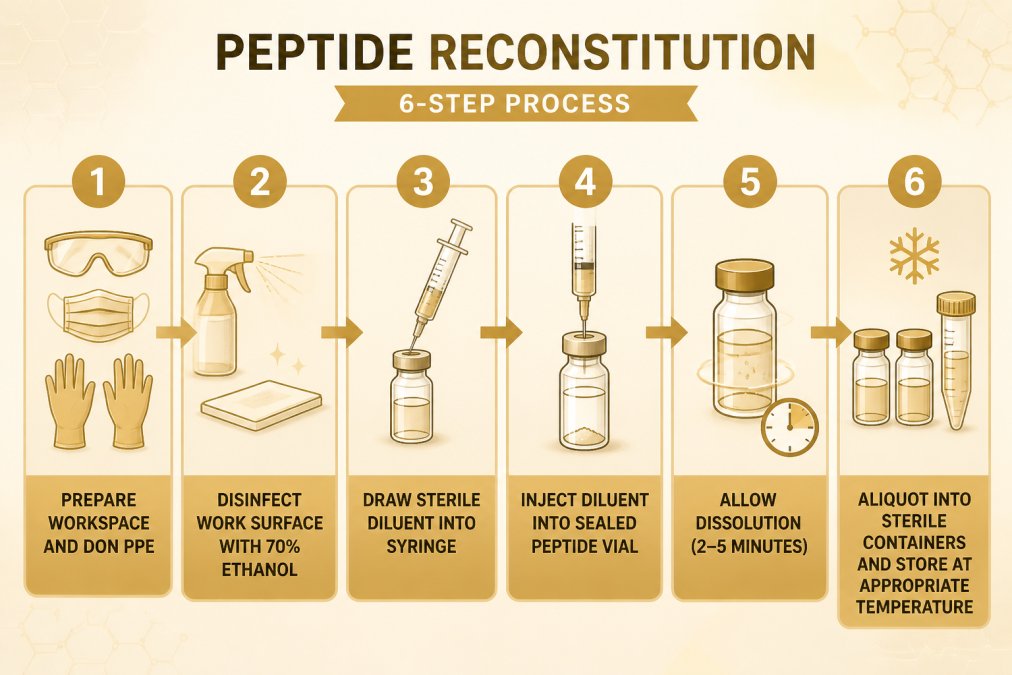
Proper sterile technique begins with workspace preparation. Your designated reconstitution area must be physically separated from traffic patterns, open windows, and HVAC returns that introduce particulates. If your institution has access to a biosafety cabinet (Class II or higher), use it for all reconstitution work. If not, establish a dedicated clean bench away from foot traffic. Disinfect your work surface with 70% ethanol and allow it to air-dry completely, this drying step is critical because ethanol residue can interfere with peptide dissolution and introduce water that accelerates degradation.
The reconstitution sequence matters. Assemble all materials before opening your peptide vial: sterile syringes, sterile needles, sterile diluent, alcohol prep pads, and your reconstitution container. This “staged approach” minimizes the time your vial remains open. Open the vial only when you’re ready to inject diluent, do not leave it exposed while you locate supplies.
Inject diluent slowly. Rapid injection creates aerosol particles that can escape the vial and contaminate your workspace, or create pressure that forces peptide solution back out. A typical reconstitution injects 1-5 mL of diluent over 30-60 seconds. Allow the peptide to dissolve passively for 2-5 minutes without agitation. Vigorous shaking introduces air bubbles and can denature sensitive peptides. Gentle swirling is acceptable if the peptide hasn’t fully dissolved after 5 minutes, but most research-grade peptides dissolve completely within this window.
Aliquoting introduces a second contamination risk. If you’re creating multiple working aliquots from a single reconstituted vial, use a fresh sterile syringe and needle for each transfer. Do not reuse the same needle across multiple aliquots, this practice transfers residual peptide solution and introduces cross-contamination. If you’re creating more than three aliquots, consider using a sterile manifold or distribution system to reduce needle punctures and contamination events.
Store reconstituted peptides in sterile, sealed containers immediately after aliquoting. Do not leave reconstituted peptides exposed to air or at room temperature. Transfer aliquots to appropriate storage containers (typically sterile microtubes or vials) within 10 minutes of reconstitution. Label each aliquot with the peptide name, concentration, reconstitution date, and your initials. This documentation prevents confusion and allows you to track which batches were reconstituted together (important if contamination is later discovered).
Document your reconstitution conditions. Record the diluent type (e.g., “sterile 0.9% saline, pyrogen-free”), the diluent volume, the reconstitution date and time, ambient temperature and humidity during reconstitution, and the name of the person performing the work.
Standardized Laboratory PPE and Safety Equipment
Personal protective equipment requirements depend on your peptide’s hazard profile and your institution’s safety protocols. Most research-grade peptides carry minimal acute toxicity, but proper PPE remains essential for contamination prevention, regulatory compliance, and occupational safety.
Glove Selection and Protocols
Lab Coat and Protective Clothing
Eye and Face Protection
Respiratory Protection
Workspace Setup and Spill Management
Many institutions require PPE training and competency verification before you’re authorized to handle research chemicals. Complete this training before your first reconstitution procedure. Training documents your understanding of hazards and proper procedures, protecting both you and your institution.
Never eat, drink, or apply cosmetics in areas where peptides are handled. Peptide solutions can contaminate food or beverages, creating accidental ingestion risk. Designate a separate break area away from your laboratory workspace.
Third-Party Purity Testing for Peptides: Verification and Documentation
Understanding Certificate of Analysis (COA) Reports
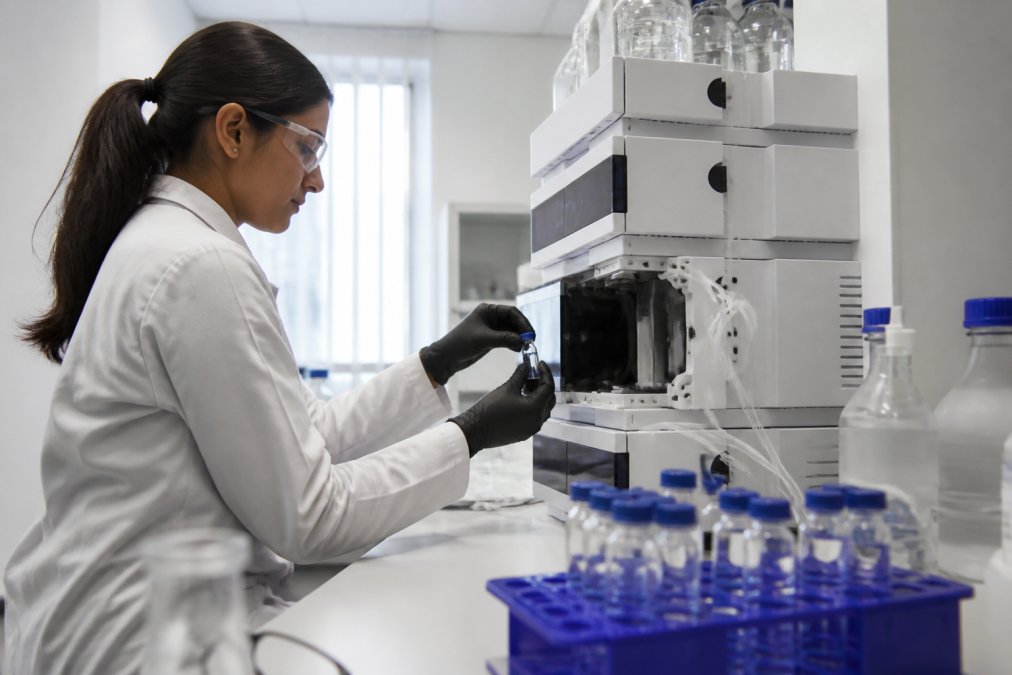
A Certificate of Analysis is your primary tool for verifying peptide purity and composition. This document, issued by an independent testing laboratory, documents the actual purity percentage, identifies any detected contaminants, and confirms the peptide’s molecular weight matches specifications.
Analytical Testing Methods and Quality Assurance Standards
HPLC remains the gold standard for peptide purity verification, but understanding alternative methods helps you evaluate supplier claims. Mass spectrometry confirms molecular weight and identifies unexpected compounds. Nuclear magnetic resonance (NMR) spectroscopy provides structural information. Each method serves specific verification purposes.
The most reliable peptide suppliers provide independent third-party testing results, not internal testing data. Independent verification removes the incentive to overstate purity or hide contaminants. This transparency is the foundation of research integrity.
Side Effects, Adverse Events, and Health Risks
Research-grade peptides are not approved for human use, and their safety profiles in humans remain largely undocumented. However, understanding potential adverse events and the mechanisms behind them helps you manage laboratory safety, recognize when something requires medical attention, and implement appropriate containment measures for your specific compounds.
Peptide Class-Specific Risk Profiles
Adverse events depend entirely on the peptide’s mechanism of action and the biological systems it targets. Different peptide classes carry fundamentally different risk profiles.
Metabolic and Endocrine Peptides
Immune-Modulating Peptides
Cardiovascular and Vascular Peptides
Neuropeptides and Central Nervous System Peptides
Exposure Routes and Risk Severity
Adverse event severity depends partly on exposure route. Research-grade peptides are not intended for any human exposure, but understanding exposure routes helps you implement appropriate laboratory safety measures.
Parenteral Exposure (Injection)
Dermal Exposure (Skin Contact)
Inhalation Exposure
Oral Exposure (Ingestion)
Documentation and Incident Response
Your responsibility as a researcher is to understand that research-grade peptides carry inherent uncertainty regarding human safety. If any team member experiences symptoms potentially related to peptide exposure, document the incident immediately.
If anyone experiences severe symptoms potentially related to peptide exposure (chest pain, difficulty breathing, loss of consciousness, severe allergic reaction), call emergency services immediately (911) and inform responders of the peptide exposure. Provide the peptide name, batch number, and any available Safety Data Sheet information to emergency personnel.
The absence of documented adverse events in humans does not mean a peptide is safe for human use. It means the safety profile remains unknown. Research-grade classification exists precisely because these compounds haven’t undergone the rigorous safety testing required for FDA approval. Treat all research-grade peptides as compounds with unknown human safety profiles and implement laboratory practices accordingly.
Regulatory Compliance and Legal Considerations
FDA Oversight and GHS Compliance Requirements
The FDA regulates peptide compounds under the Federal Food, Drug, and Cosmetic Act. Research-grade peptides fall outside direct FDA approval pathways, but they remain subject to regulatory oversight regarding how they’re labeled, advertised, and distributed.
Safety Data Sheets and Documentation Requirements
Safety Data Sheets (SDS) are your primary resource for understanding peptide hazards and proper handling procedures. A complete SDS covers 16 sections including identification, hazard classification, composition, first aid measures, fire-fighting measures, accidental release procedures, handling and storage, exposure controls, physical and chemical properties, stability and reactivity, toxicological information, ecological information, disposal, transport information, regulatory information, and other information.
How to Evaluate and Select Safe Peptide Research Materials
Distinguishing Clinical-Grade from Research-Grade Products
Clinical-grade peptides have undergone FDA review and been approved for specific therapeutic indications. They carry FDA-assigned National Drug Codes (NDCs). They’re manufactured under Good Manufacturing Practice (GMP) standards with rigorous quality control. They can legally be prescribed by healthcare providers.
Red Flags and What to Avoid
Certain supplier practices indicate problematic quality or compliance issues. Avoid suppliers who make therapeutic claims about research-grade peptides. Avoid those who lack third-party testing documentation. Avoid suppliers who can’t provide complete SDSs or who give vague answers about their manufacturing processes.
Never purchase peptides from sources that advertise human consumption or therapeutic use. These suppliers either misrepresent their materials’ regulatory status or deliberately violate FDA regulations. Purchasing from such sources exposes you to legal liability and compromises research integrity.
Conclusion: Building a Safe and Compliant Research Practice
Peptide research safety and handling requires attention to multiple interconnected details: regulatory status, storage protocols, reconstitution procedures, verification methods, and supplier evaluation. Each element contributes to research integrity and team safety.
| Verification Element | Purpose | Documentation Required |
|---|---|---|
| Third-party purity testing | Confirm actual purity percentage | Certificate of Analysis with HPLC data |
| Stability data | Understand degradation rates | Storage stability reports covering 6-12 months |
| Safety Data Sheets | Identify hazards and handling procedures | GHS-compliant SDS with 16 required sections |
| Supplier credentials | Verify manufacturing standards | Business registration, lab certifications, quality protocols |
| Cold-chain documentation | Confirm proper storage during shipment | Temperature logs and shipping records |
Frequently Asked Questions
How long can peptides go unrefrigerated without degrading?
Lyophilized peptide powders can remain stable at room temperature for short periods, but stability depends on the specific peptide structure, environmental humidity, and light exposure. Most research-grade peptides should be stored at 2-8°C to maintain chemical stability and prevent degradation. Reconstituted peptides are more vulnerable and typically remain viable for 24-72 hours when refrigerated, though this varies. Always verify storage requirements on your Certificate of Analysis and Safety Data Sheet to ensure accurate handling for your specific compound.
What role does third-party purity testing for peptides play in research safety?
Third-party purity testing provides independent verification that peptide batches meet claimed specifications, typically confirming purity levels above 95-99%. Testing identifies contaminants, byproducts, and impurities that could compromise research validity or pose safety risks. A Certificate of Analysis documents analytical methods used, results, and batch-specific data. This verification protects researchers by ensuring consistency across experiments and reducing the risk of adverse events from contaminated materials. Always request and review COA reports before conducting research with new batches.
What are the standard laboratory safety protocols for handling research peptides?
Safe peptide handling requires sterile technique to prevent cross-contamination, appropriate PPE including gloves and lab coats, and a clean workspace. Use sterile syringes and needles for reconstitution, maintain aseptic conditions during preparation, and follow GHS compliance guidelines. Document all handling procedures, storage conditions, and reconstitution dates. Implement cold-chain storage with temperature monitoring, use biological safety cabinets when required by your protocol, and maintain detailed records of analytical results. Always reference the Safety Data Sheet for your specific peptide compound.
How should I evaluate the quality of peptide research materials before purchasing?
Verify that suppliers provide independent third-party testing results and accessible Certificates of Analysis for every batch. Check that purity levels exceed 95%, ideally 99% or higher. Confirm the supplier maintains proper cold-chain storage and provides transparent documentation with secure batch tracking. Request Safety Data Sheets and verify GHS compliance. Look for suppliers offering QR-coded analytical reports for batch transparency. Compare clinical-grade versus research-grade classifications based on your experimental needs. Avoid suppliers unable to provide comprehensive testing documentation or those making unverified purity claims.
What happens if I use peptides from sources without proper third-party verification?
Unverified peptides carry significant risks including unknown purity levels, potential contaminants, inconsistent potency, and undocumented side effect profiles. Contaminated or degraded peptides can invalidate research results, compromise experimental reproducibility, and pose unknown health risks. Without analytical testing documentation, you cannot verify the actual composition or safety of the compound. This creates liability concerns and may violate regulatory compliance requirements. Research integrity depends on using verified materials with documented purity, stability data, and quality assurance records from reputable sources.
How does temperature affect the stability of lyophilized peptides during storage?
Temperature directly impacts peptide chemical stability and shelf life. Lyophilized peptides stored at 2-8°C (refrigerated conditions) maintain stability for extended periods, often 12-24 months or longer depending on the specific peptide structure. Room temperature storage (around 20-25°C) accelerates degradation, while freezing at -20°C or below can further extend stability. Fluctuating temperatures cause moisture absorption and crystal formation, damaging the lyophilized structure. Long-term stability data in your Certificate of Analysis specifies recommended storage temperatures and expected degradation rates. Maintaining consistent cold-chain temperatures is critical for preserving bioavailability and ensuring accurate dosage accuracy in your research.
What should I look for in a Certificate of Analysis to ensure peptide quality?
A comprehensive COA should include the peptide name, batch number, molecular weight, purity percentage (ideally 95%+), analytical testing methods used, and specific test results. Verify that testing was performed by an independent third-party laboratory, not by the supplier alone. The report should document contaminant analysis, water content, and any impurities detected. Check that results include dates, analyst signatures, and batch-specific data rather than generic claims. Ensure the COA references applicable standards and includes stability data and storage recommendations. A quality COA provides complete transparency and allows you to verify that the peptide meets your research requirements before use.